

“Ecological Compensation Measures and Obligations“
An insight into the current implementation requirements for energy efficiency measures in the context of state industrial support schemes and regulatory law.
In the coming financial years, the importance of identifying and implementing so-called “economic energy efficiency measures” will remain significant for energy-intensive industries.
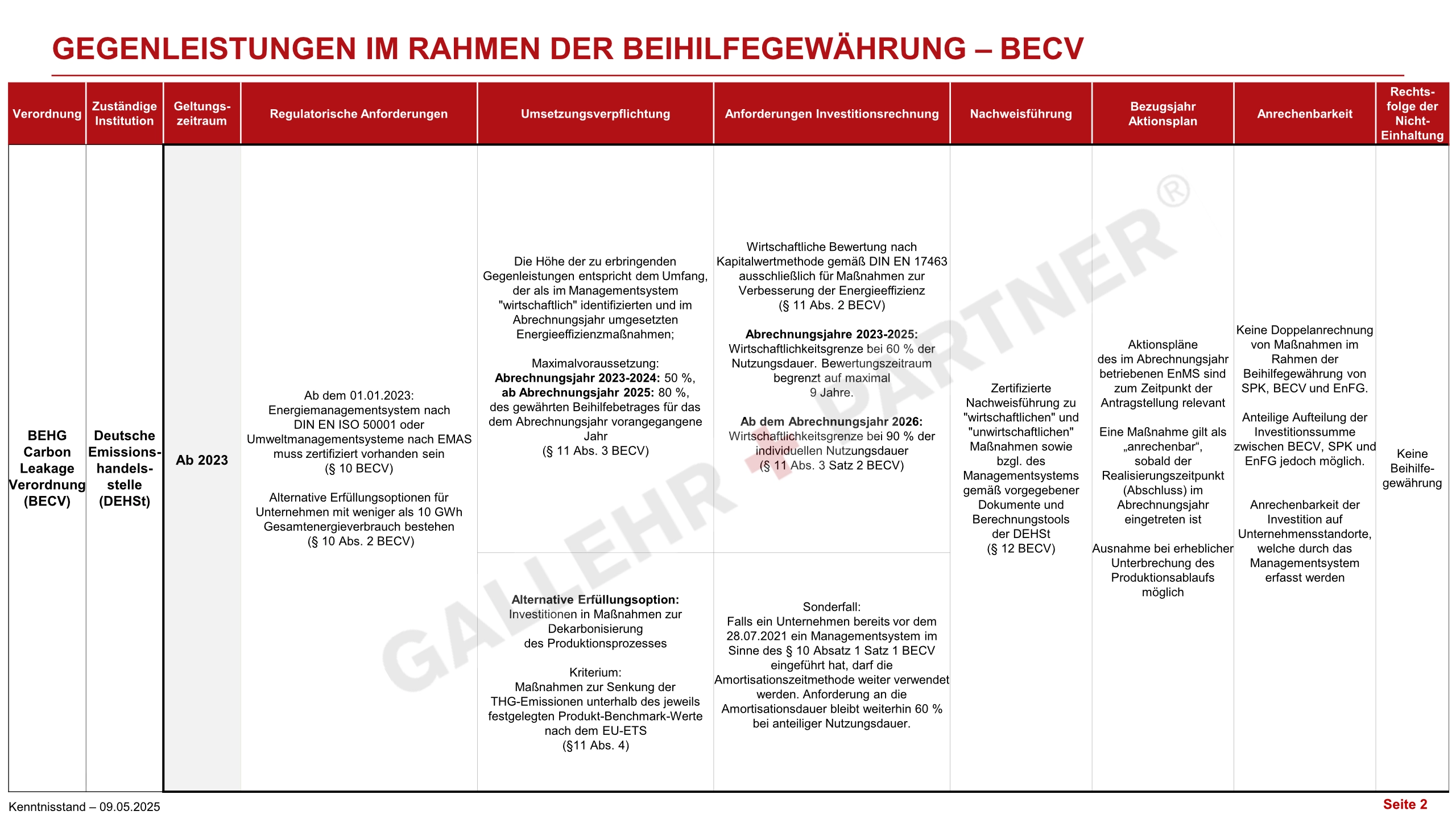
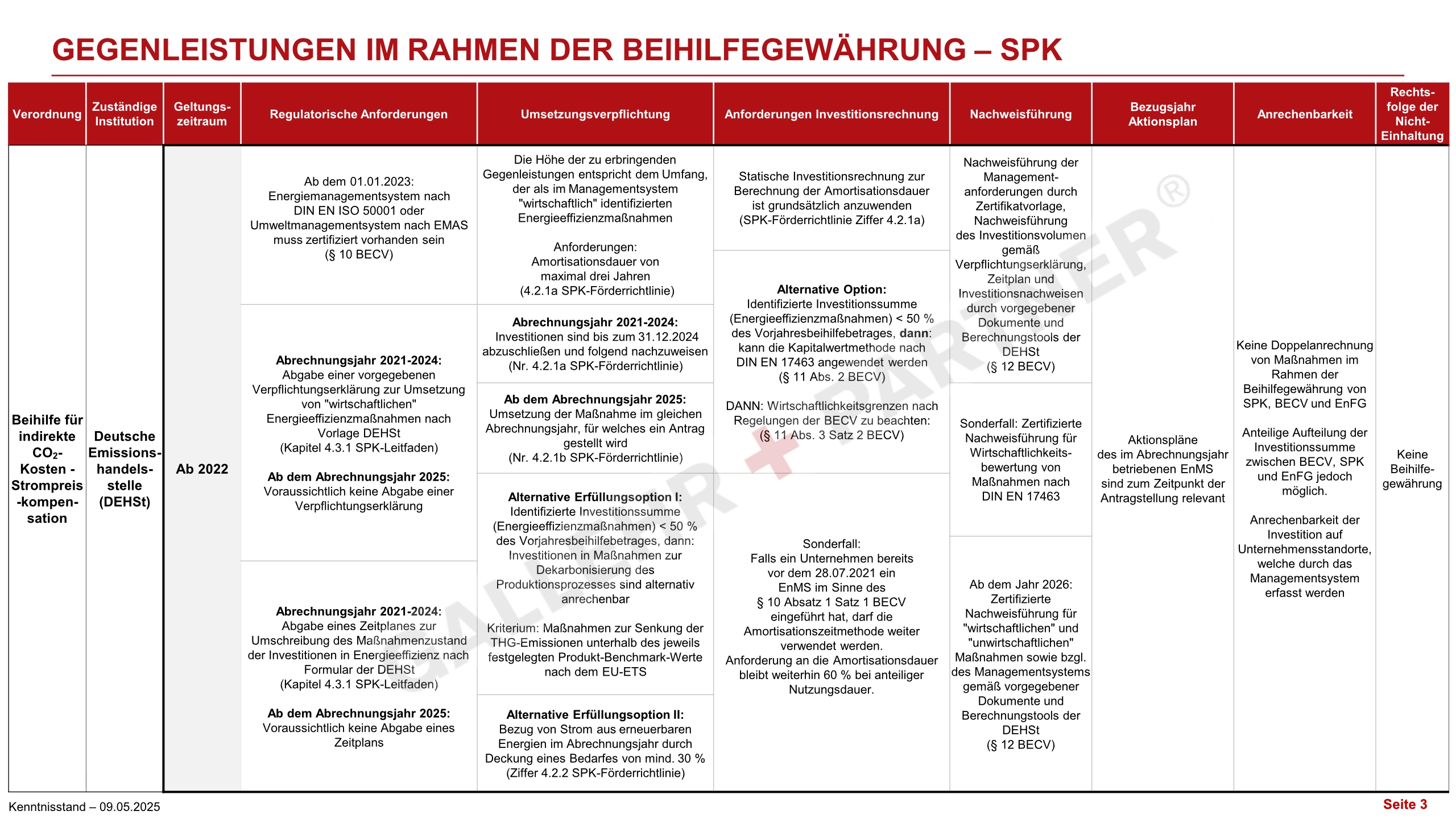
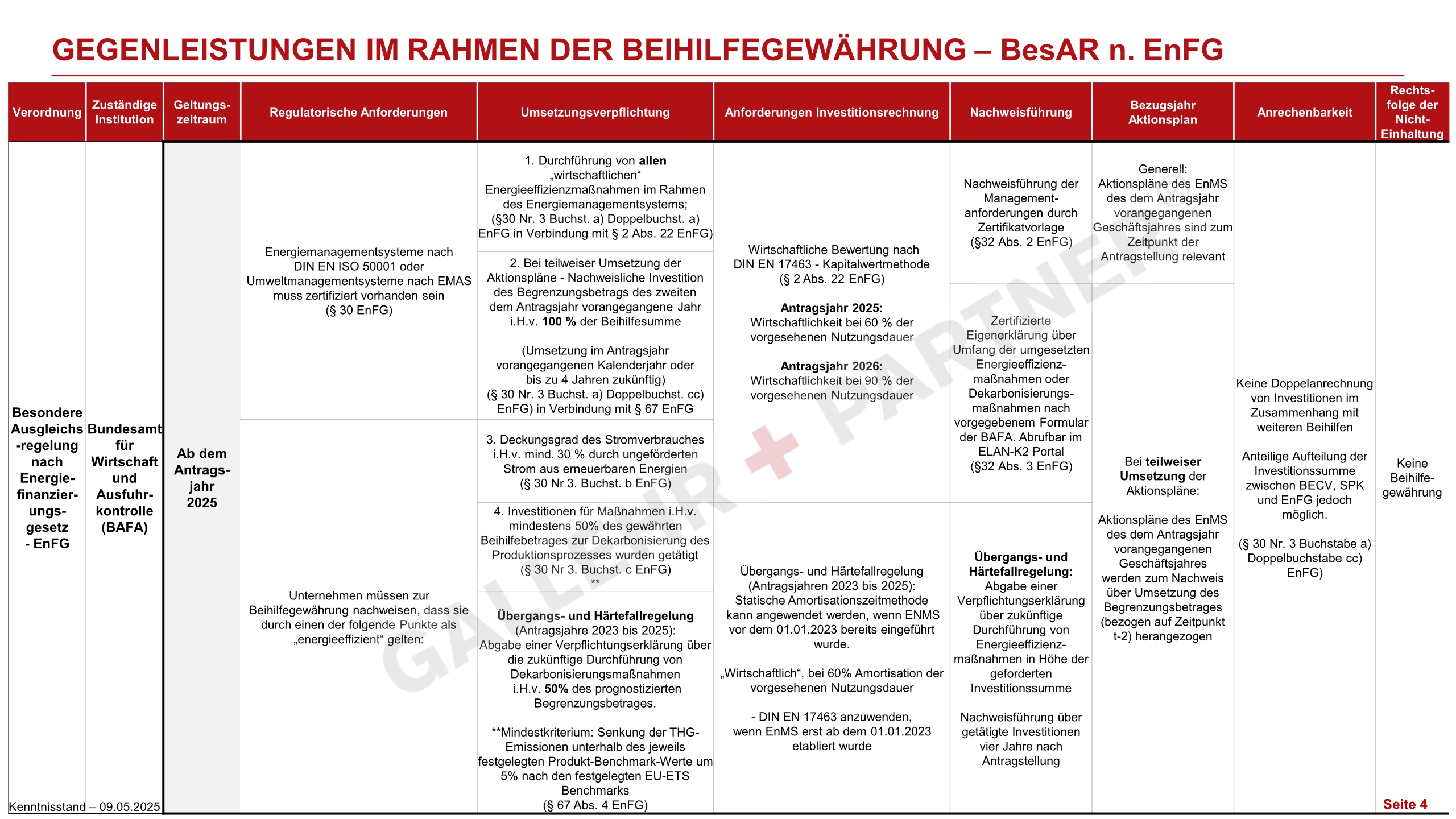
To provide an overview of the specific economic and legal framework, as well as the requirements for management processes, GALLEHR+PARTNER® has developed the “Overview Matrix – Environmental Compensation measures and Obligations”. The specific requirements are currently being developed and are constantly evolving. We will therefore continue to provide you with updated versions of the matrix at irregular intervals.

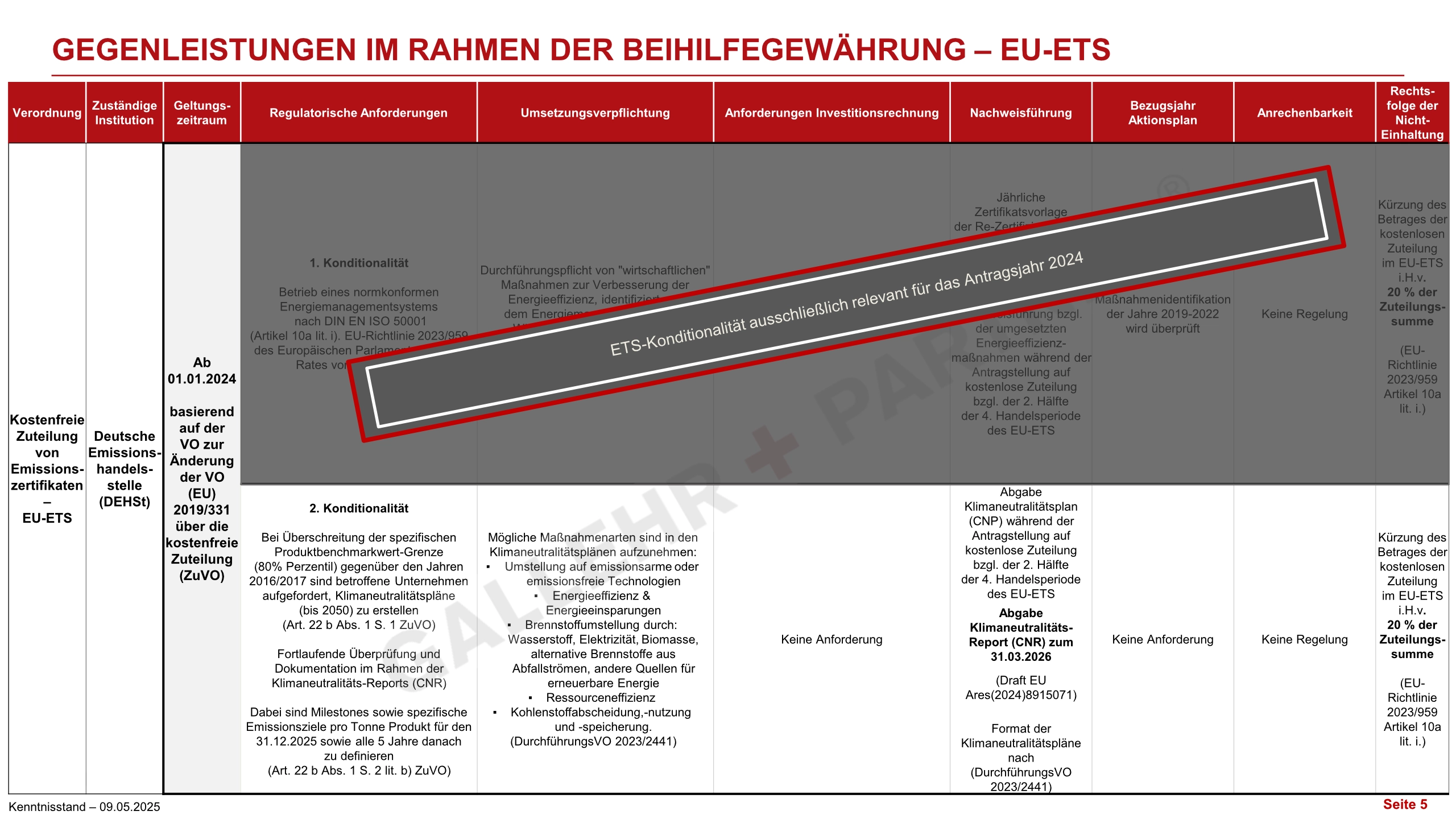
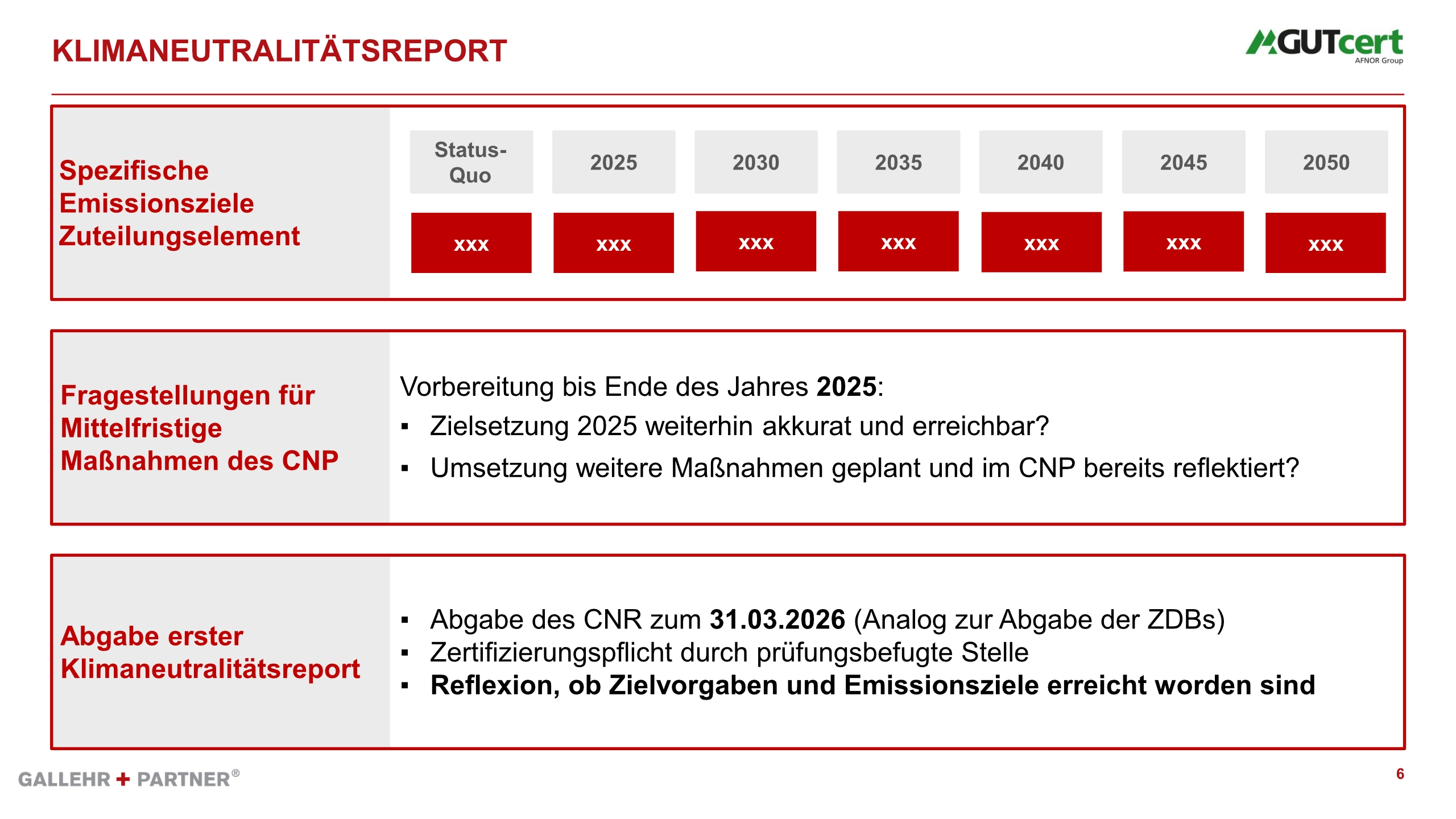
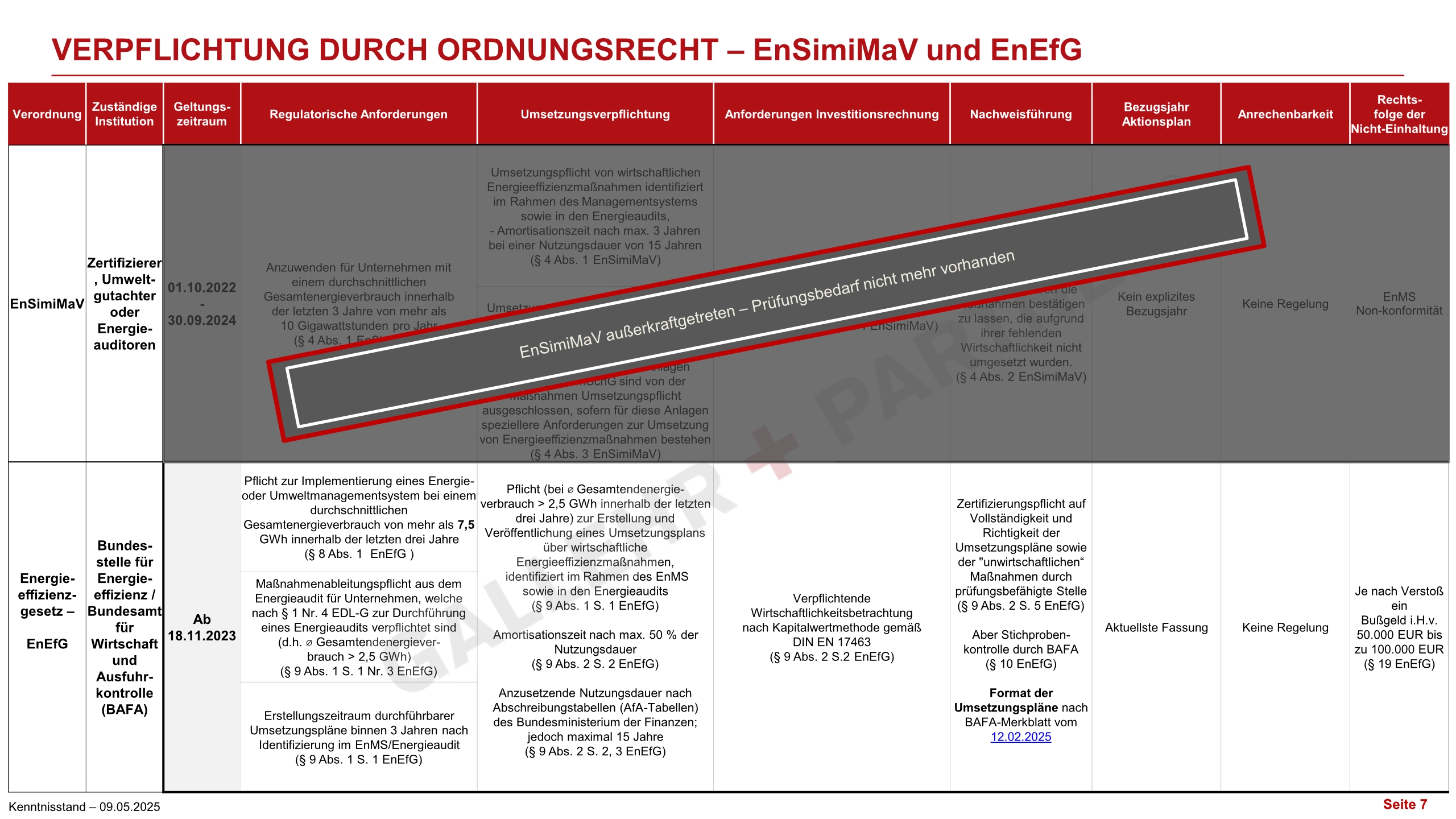
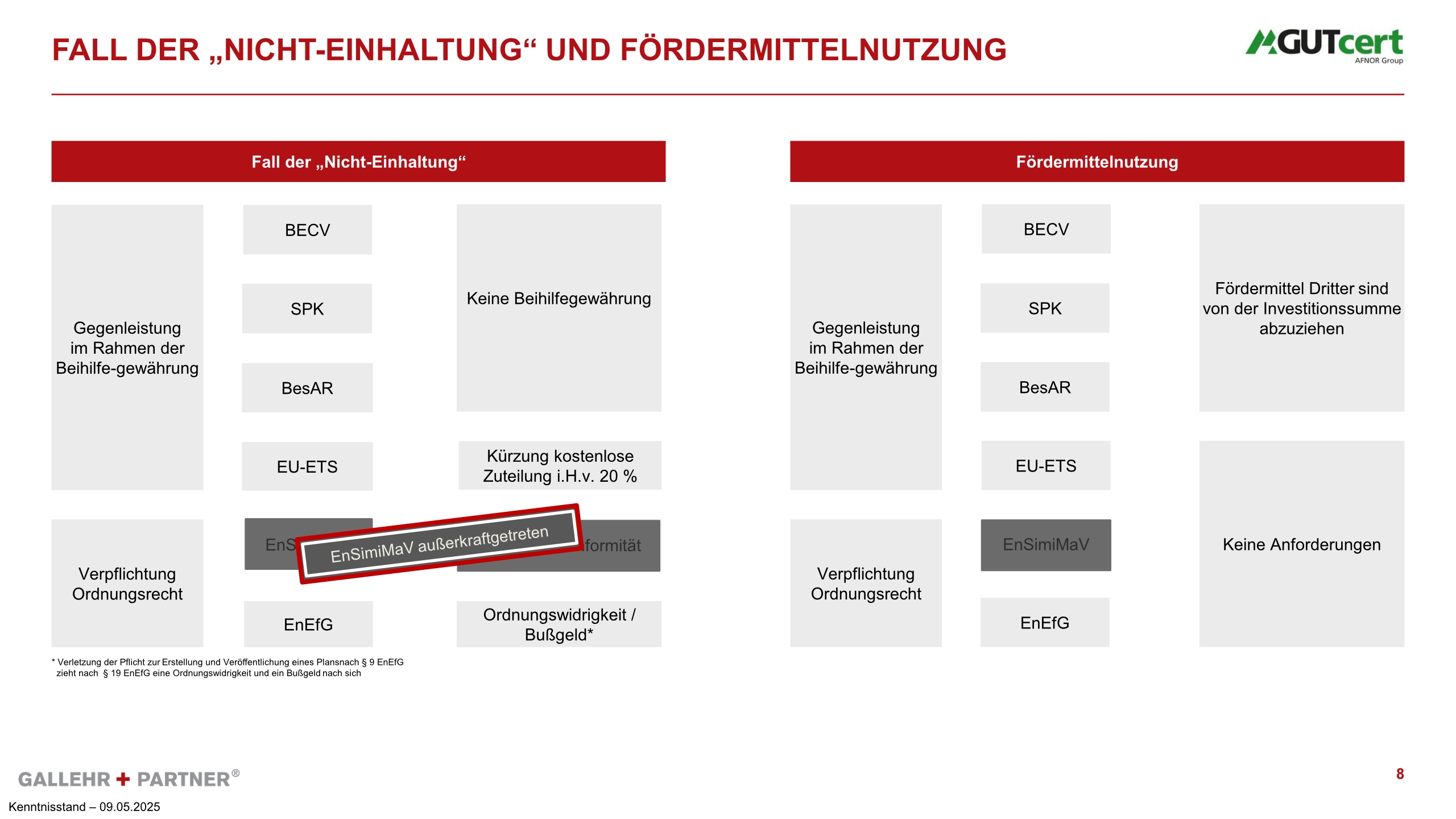
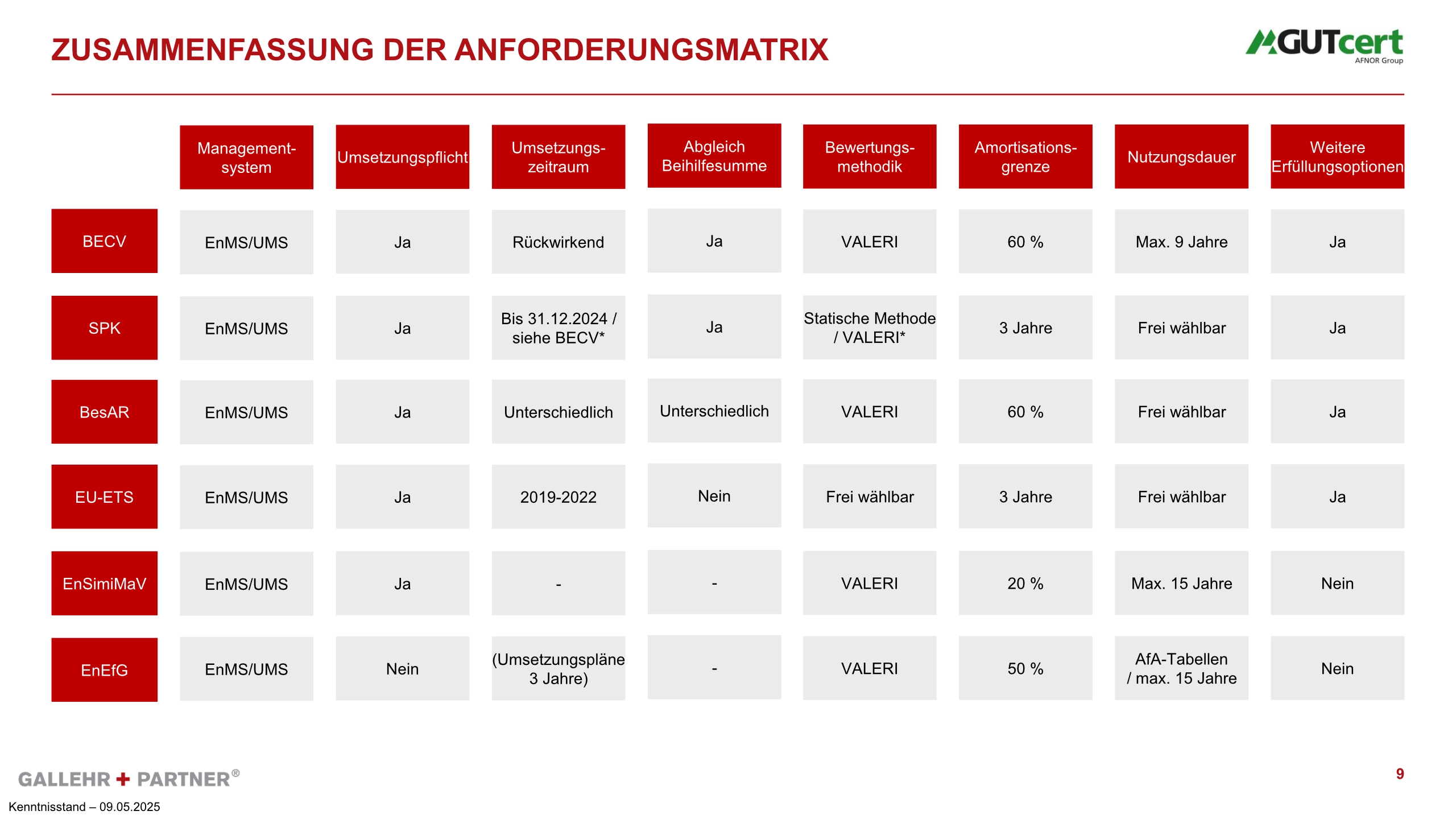
Overview matrix – Ecological Compensation Measures and Obligations
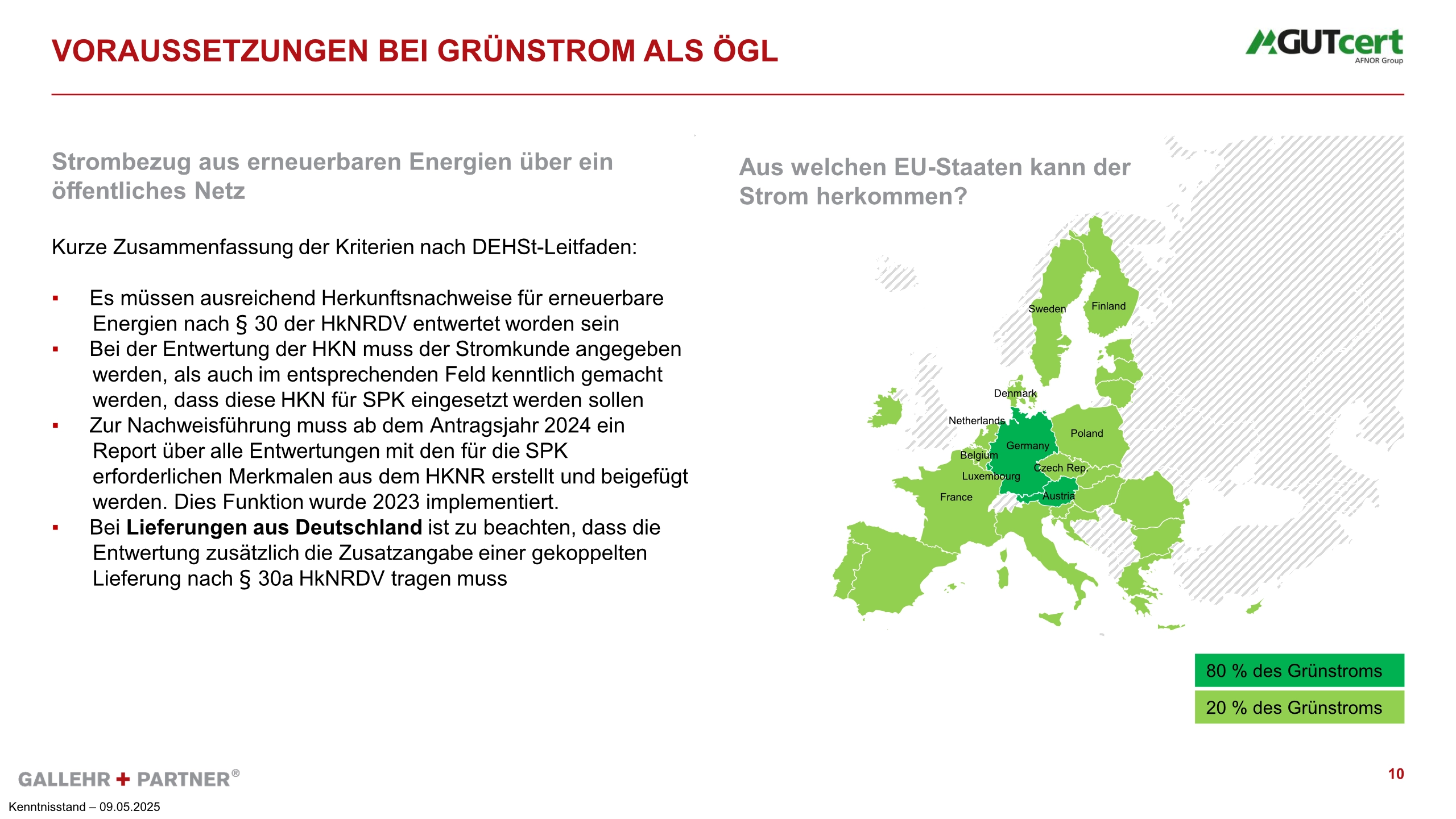
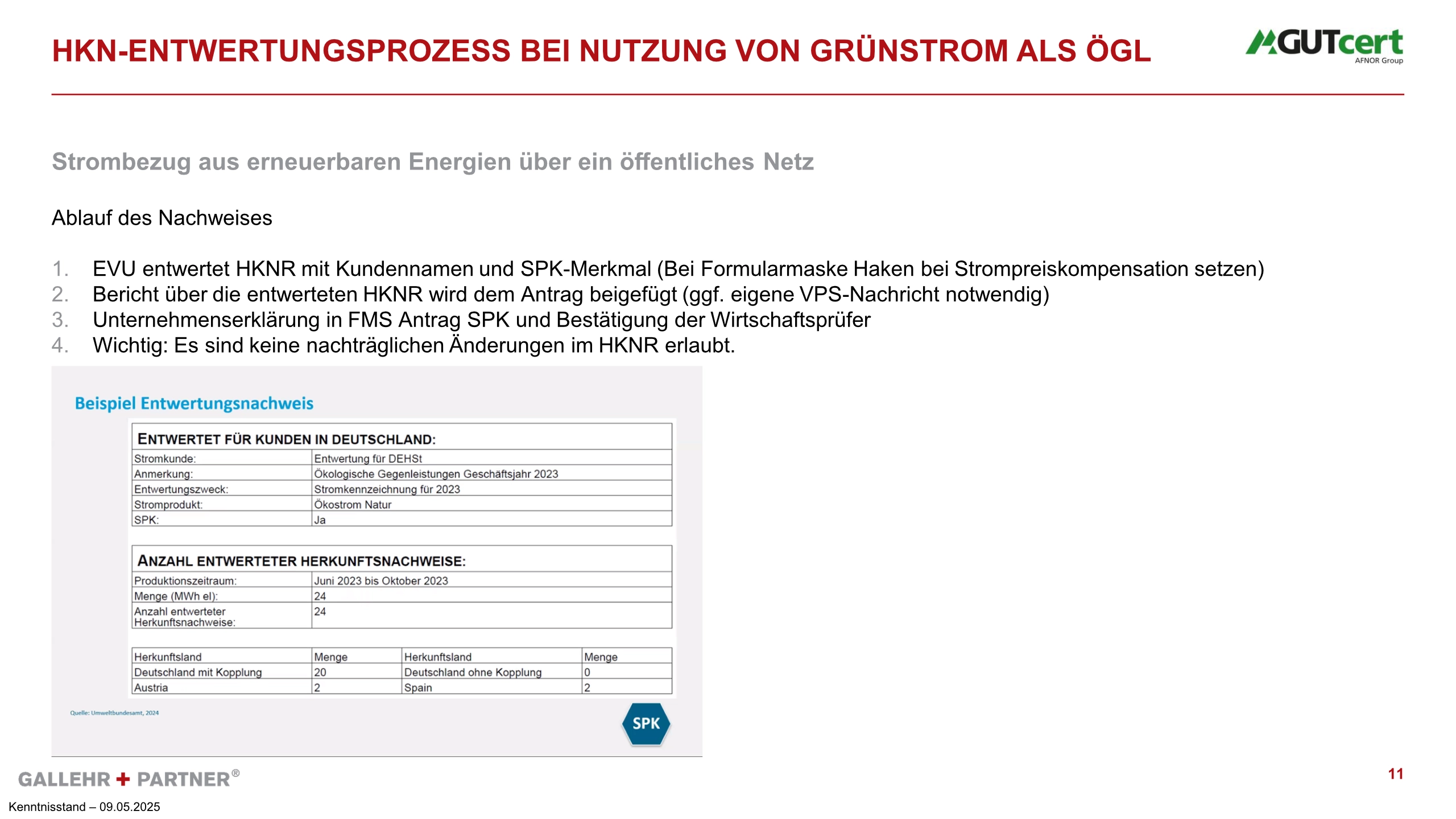
German Companies must continue to provide evidence of so-called ‘Ecological Compensation Measures’ when submitting applications if they wish to claim benefits from German industrial support schemes or release from obligations under the European Emission Trading System. This applies to subsidies and grant under the German BECV, the German electricity price compensation scheme (SPK) – which has now been extended until 2030 – and the German Special Equalisation Scheme (BesAR) under the Energy Financing Act. Nevertheless, the implementation of ‘economic’ energy efficiency measures was a necessary prerequisite when applying for free allocation of emission allowances under the EU ETS in the 2024 application year.
On the other hand, under the German Energy Efficiency Act (EnEfG), which came into force on 18 November 2023, there is a permanent obligation to draw up and publish concrete, feasible plans for final energy saving measures.
The requirements for energy efficiency measures are similar across all the legal areas listed above, but do differ in detail. However, only ‘economically viable’ measures are to be implemented in all cases. In the majority of these legal areas, the requirements of DIN EN 17463 (VALERI) generally apply as the decisive criterion for economic viability.
Our Overview matrix – Ecological Compensation Measures and Obligations – is available for download via the following link.
GALLEHR+PARTNER® would be happy to discuss your specific situation with you. Our team is already assisting several of our clients with the currently applicable aid regulations. Consequently, we would be glad to advise you on the necessary adjustments to your ISO 50001 management systems, as well as on the relevant VALERI assessment of energy efficiency measures (net present value method). Please do not hesitate to contact us for further information or support.


Further information about our company is available here: